The question
Why isn’t “the deepest setting” the most regenerative — and why do cosmetic and medical depths ask for different biology?
What is happening biologically?
Skin is layered. The epidermis is a thin barrier. Beneath it, the papillary dermis holds finer collagen and vessels; the reticular dermis holds deeper scaffolding. A needle that stays epidermal is a different conversation from one that reaches dermis.
A teaching map used in dermal-needling education (in the Setterfield tradition) often describes approximate ranges:
- About 0.25–0.3 mm — epidermis; often called a cosmetic range.
- About 0.5 mm — toward the basal layer and upper papillary dermis.
- About 1.0–1.5 mm — papillary to upper reticular dermis; often the medical collagen-induction conversation.
- About 2.0 mm and beyond — deeper reticular work, only when site and judgment support it.
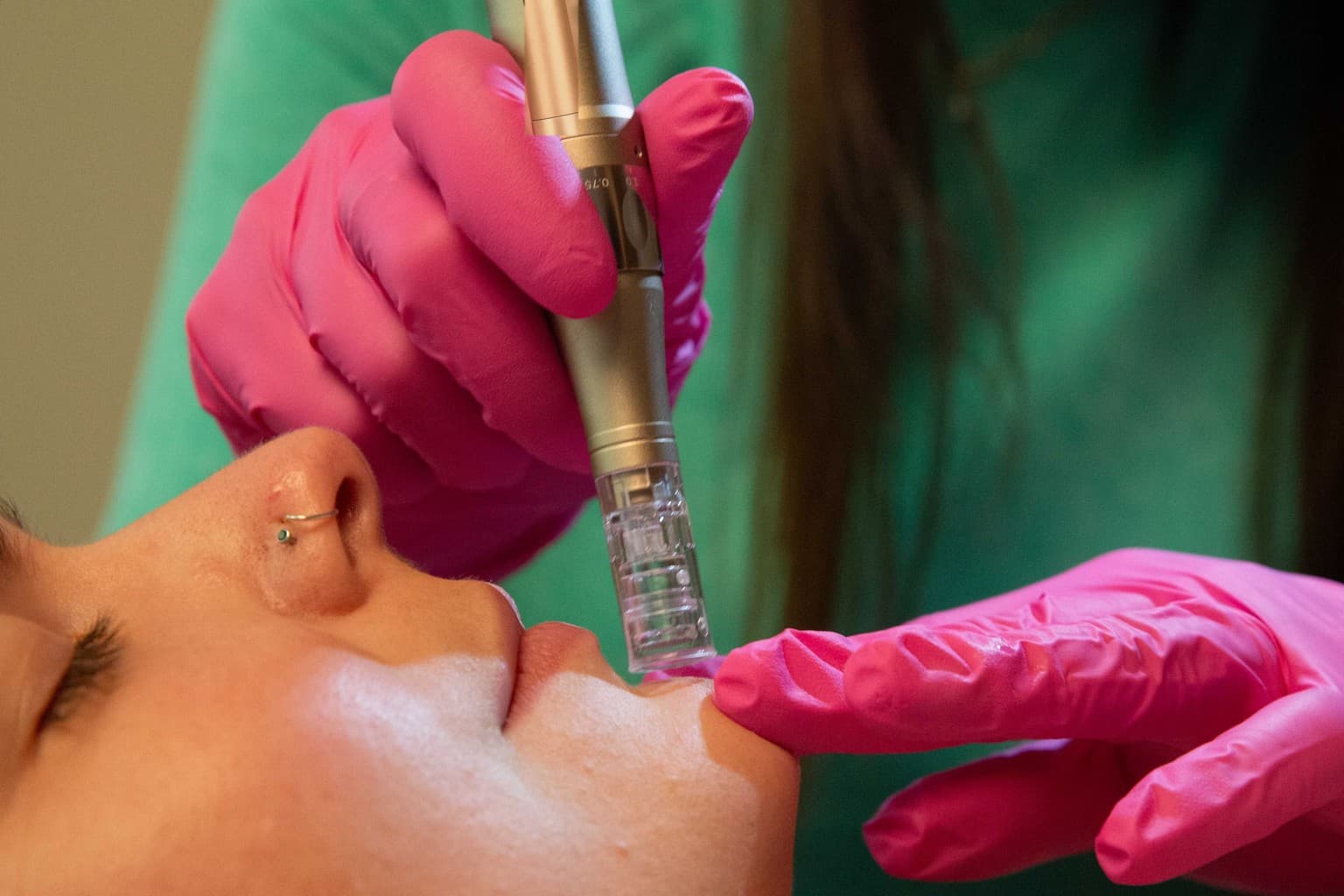
These numbers are a framework, not a prescription. Cheek, eyelid, neck, and scalp are not the same thickness. Age and individual anatomy change the map. Hand pressure can drive a short needle deeper than the dial suggests — which is why technique is not a menu click.
What research has studied
How we use numbers. When a percentage or count appears here, it belongs to a named study with a named population. It is not a studio guarantee.
Reviews of clinical microneedling treat depth, device, and recovery as part of the method, not afterthoughts (Alster and Graham, 2018). They do not publish a single correct millimeter for every concern.
On the scalp, one 12-week trial of androgenetic alopecia compared 0.6 mm and 1.2 mm needling plus minoxidil with minoxidil alone. Hair count and thickness rose in all groups; 0.6 mm plus minoxidil outperformed minoxidil alone on count and thickness, and tended to do better than 1.2 mm on those measures (Faghihi and colleagues, 2020). That is a scalp finding in that protocol — not a rule that “deeper is always better,” and not a face-depth chart.
We will not represent unsigned absorption multipliers. Needling can increase transdermal delivery; published fold-changes vary. Thousand-percent absorption headlines are marketing language, not a figure we will hang a treatment on.
What this means in practice
Depth is set after assessment: concern, site, inflammatory status, pigment risk, and what the tissue can use now. Cosmetic-range work and medical-range work are not interchangeable, and mixing them without judgment is how injury outruns repair.
On Restore, we do not needle through active lesions. On Refine, Renew, Revive, and Regrow, depth still follows anatomy. A Signature Pathway does not unlock a preset millimeter.
Federica’s clinical perspective
Patients sometimes ask for the longest needle because they have been taught that intensity equals results. I would rather choose the depth the tissue can remodel than the depth that photographs as drama. Pressure, angle, and interval are part of that choice.
If a pass would insult pigment, an inflamed follicle, or a barrier that is already struggling, we wait. Depth is a clinical verb, not a product feature.
The next step is not a retail booking. Begin with the Online Assessment so Federica can review what the skin is actually asking for.
Educational only — not a substitute for personalized medical advice. Talk with a qualified clinician about your own care.
Visual explanation
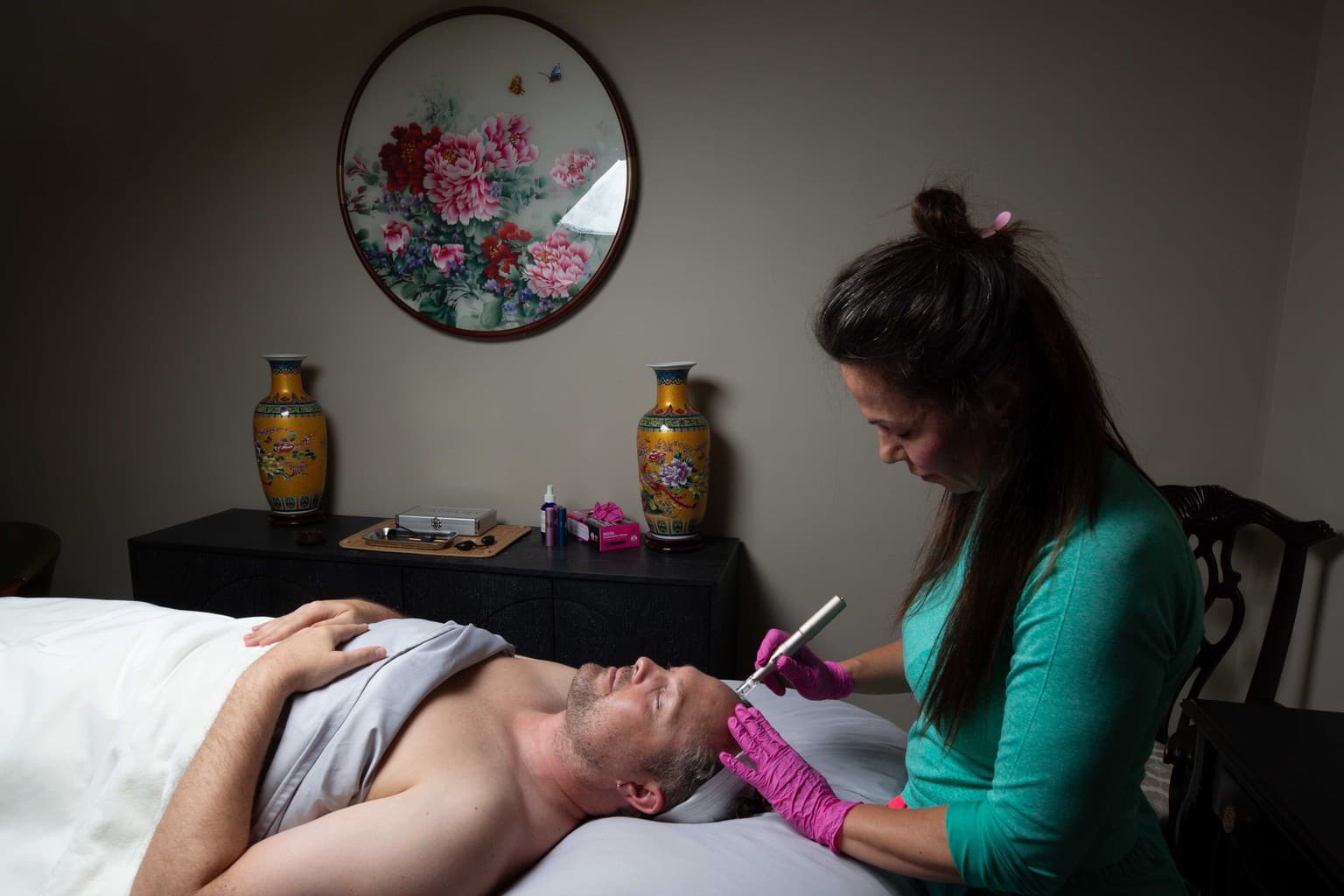
Needle depth is a clinical choice about which layer is being asked to respond — not a retail setting. Thickness varies by face zone, age, and how much pressure is applied.
Visual explanation