The question
What actually happens in the skin after microneedling — and why does The Regenerative Studio refuse to treat the device as the whole method?
Patients often arrive having seen cosmetic needling, at-home rollers, or a single “glow facial.” Those experiences are not the same as practitioner-directed collagen induction inside a regenerative protocol.
What is happening biologically?
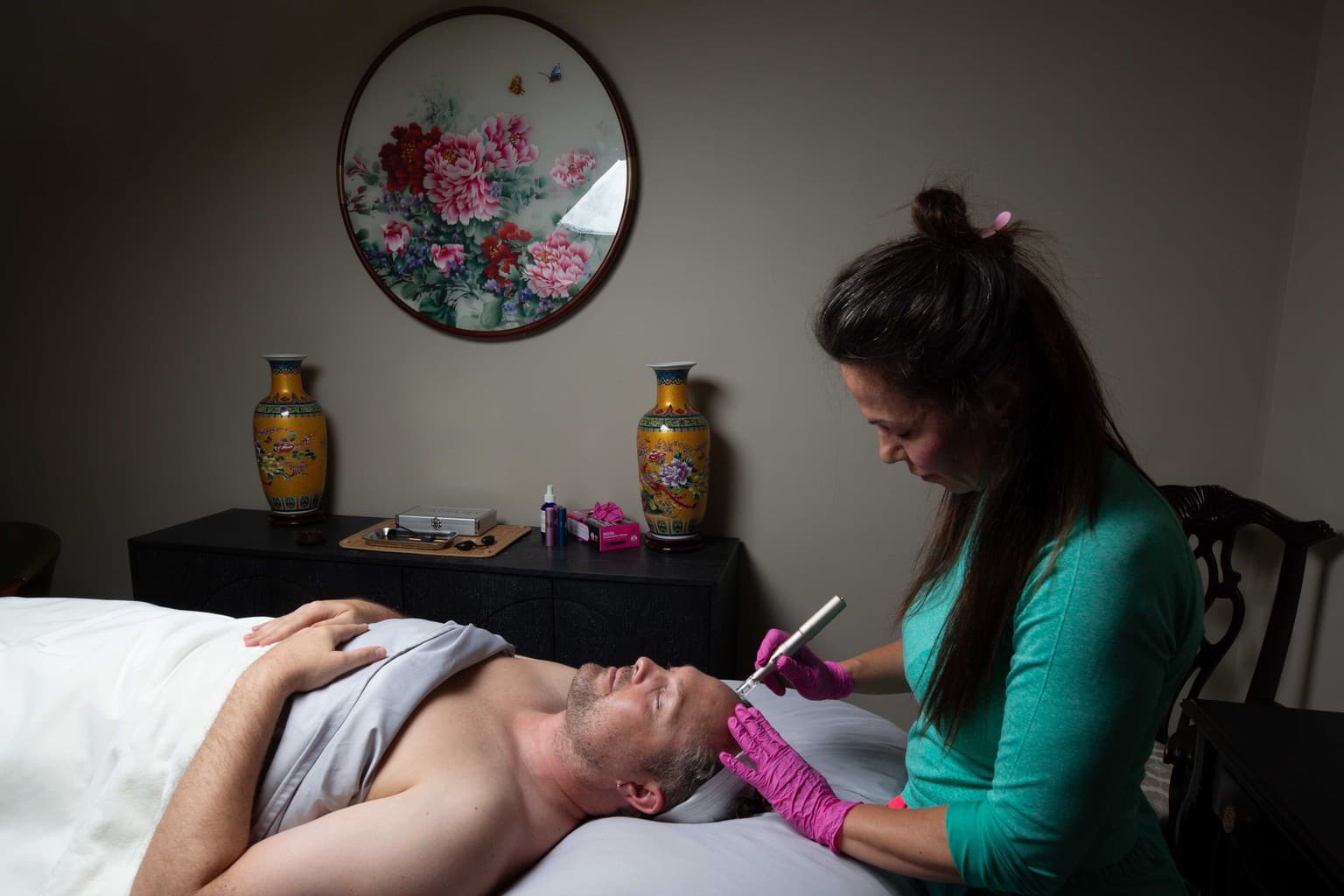
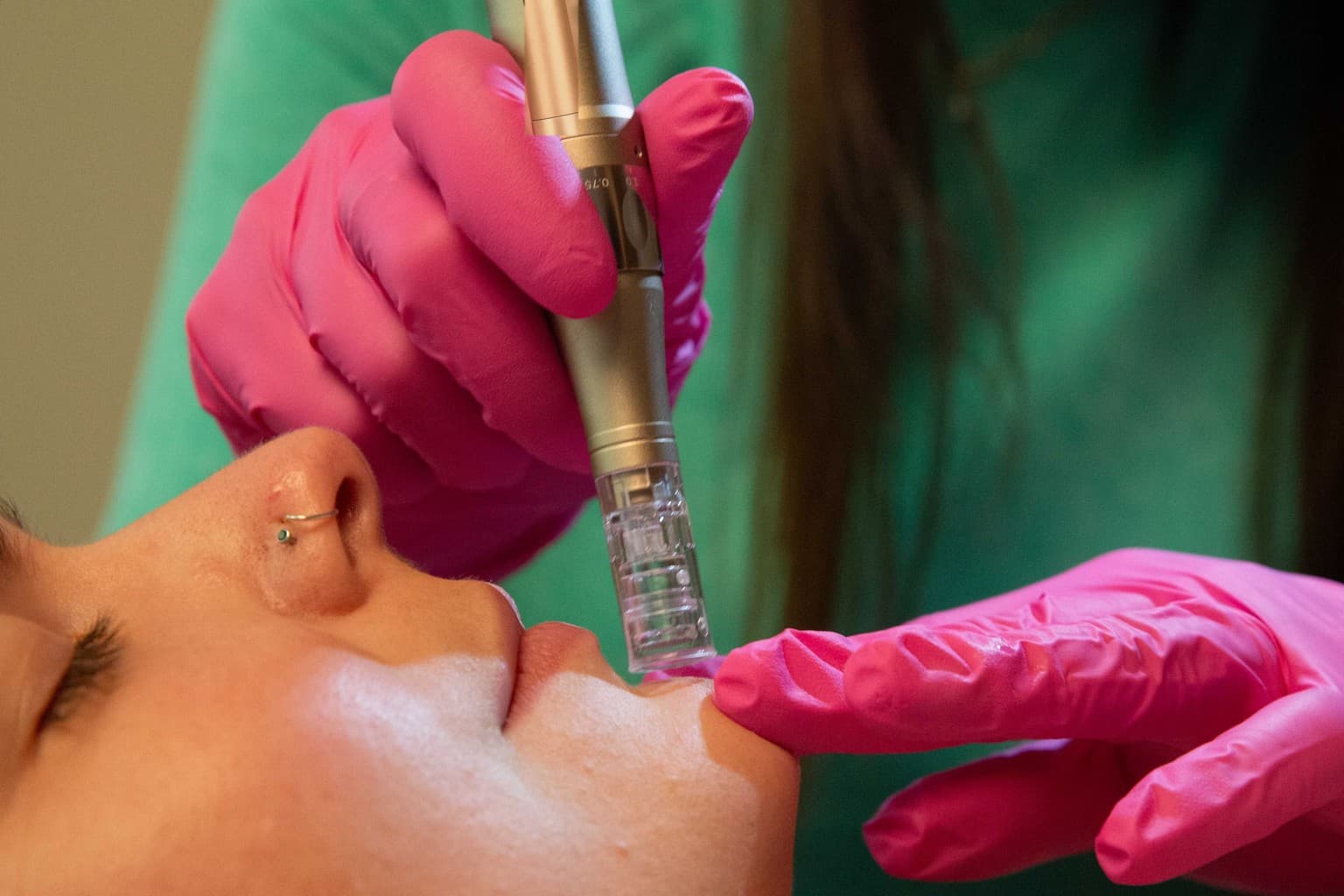
Clinical microneedling creates controlled microchannels in the skin. That mechanical stimulus is intended to recruit a wound-healing response: platelets and inflammatory messengers first, then repair cells, then new matrix — including collagen — over weeks to months.
Depth matters because the epidermis, papillary dermis, and deeper dermis are not one tissue. A shallow pass and a deeper, anatomy-specific pass ask for different biology. Intensity, spacing, and recovery window matter as much as the tool.
Needling can also increase how some topicals move through the barrier. Fold-changes in published work vary by molecule, vehicle, and needle length. Marketing figures that claim the skin absorbs only a tiny fraction of product, or that needling multiplies absorption by thousands of percent, are not claims this studio will make.
That is why treatment here is assessment-led. The needle is a stimulus. The plan is a judgment about what this skin can use now.
What research has studied
How we use numbers. When a percentage or count appears here, it belongs to a named study with a named population. It is not a studio guarantee.
Dermatologic literature has studied microneedling as collagen induction therapy for texture, selected scarring, and rejuvenation (Alster and Graham, 2018). Histologic work on percutaneous collagen induction has described remodeling after controlled needling (Aust and colleagues, 2008). Those papers support a time-dependent model. They do not license a guaranteed collagen percentage for every face.
Photobiomodulation has been studied separately for cellular signaling relevant to inflammation and recovery (Hamblin, 2017). In this practice, light is an adjunct when it serves the plan — not evidence that every visit must include it.
Stories of ancient “derma rolling” as proven archaeology are cultural lore, not a citation we will treat as history. The clinical method here is contemporary collagen induction, placed inside a practitioner-directed protocol.
What this means in practice
In studio language, regenerative microneedling means: a calibrated stimulus, sterile technique, individualized depth, and a wider protocol that may include topical support, light, acupuncture, or home care — selected, not bundled by default.
It also means refusing claims we have not verified: exact absorption multipliers, device rankings, botanical stem-cell percentages, or guaranteed collagen figures do not belong on a patient-facing page.
Active inflammatory lesions are not needled through. Surrounding tissue may still be considered when the environment can use a quieter plan. Contraindications — including pregnancy, active infection, and other medical limits — are confirmed in assessment, not in a retail checkout.
Federica’s clinical perspective
I do not treat the device as the medicine. I treat the conversation between stimulus, tissue, and the person in front of me. Some skin needs a quieter pass. Some needs more time before any pass. Some needs scar remodeling and should not be confused with active inflammatory acne.
Quick-change modalities such as neuromodulators or fillers are a different biology from paced remodeling. I do not argue them as simply inferior; I am clear that they are not what this protocol is asking of collagen. Traditional training keeps me looking at the whole person; contemporary research keeps me honest about what needling can and cannot claim.
The next step is not a retail booking. Begin with the Online Assessment so Federica can review what the skin is actually asking for.
Educational only — not a substitute for personalized medical advice. Talk with a qualified clinician about your own care.
Visual explanation
Needle depth is a clinical choice about which layer is being asked to respond — not a retail setting. Thickness varies by face zone, age, and how much pressure is applied.
Last reviewed 2026-08-18 · Evidence: supported