The question
What happens to collagen as skin ages — and what can a regenerative protocol reasonably ask of it?
What is happening biologically?
Dermal collagen and elastin form the scaffolding that helps skin read as firm and fine rather than creased. With time, sun, and inflammatory load, that matrix can thin, fragment, and organize less efficiently. Fine lines are often the surface read of that change — not a moral failure of the face.
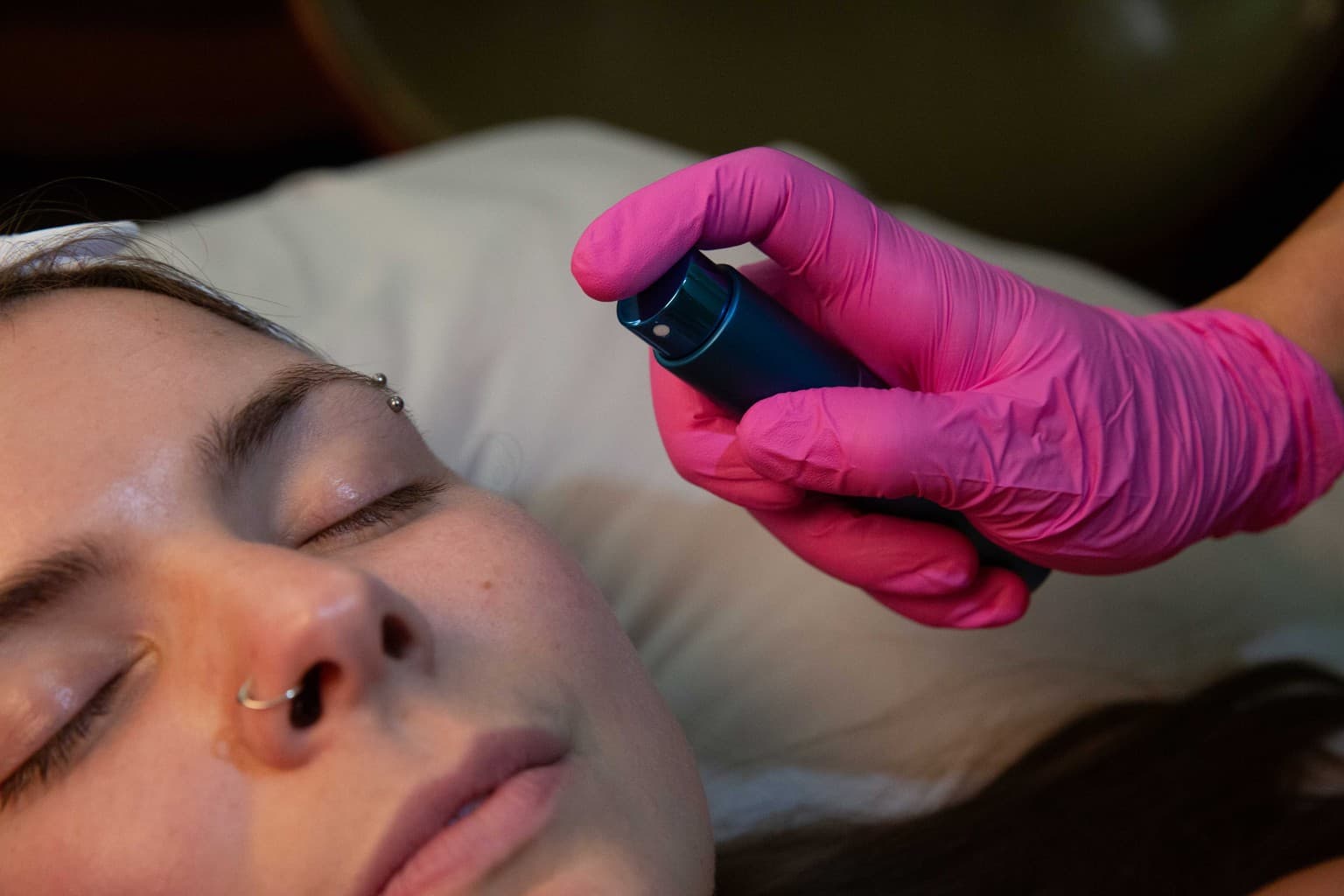
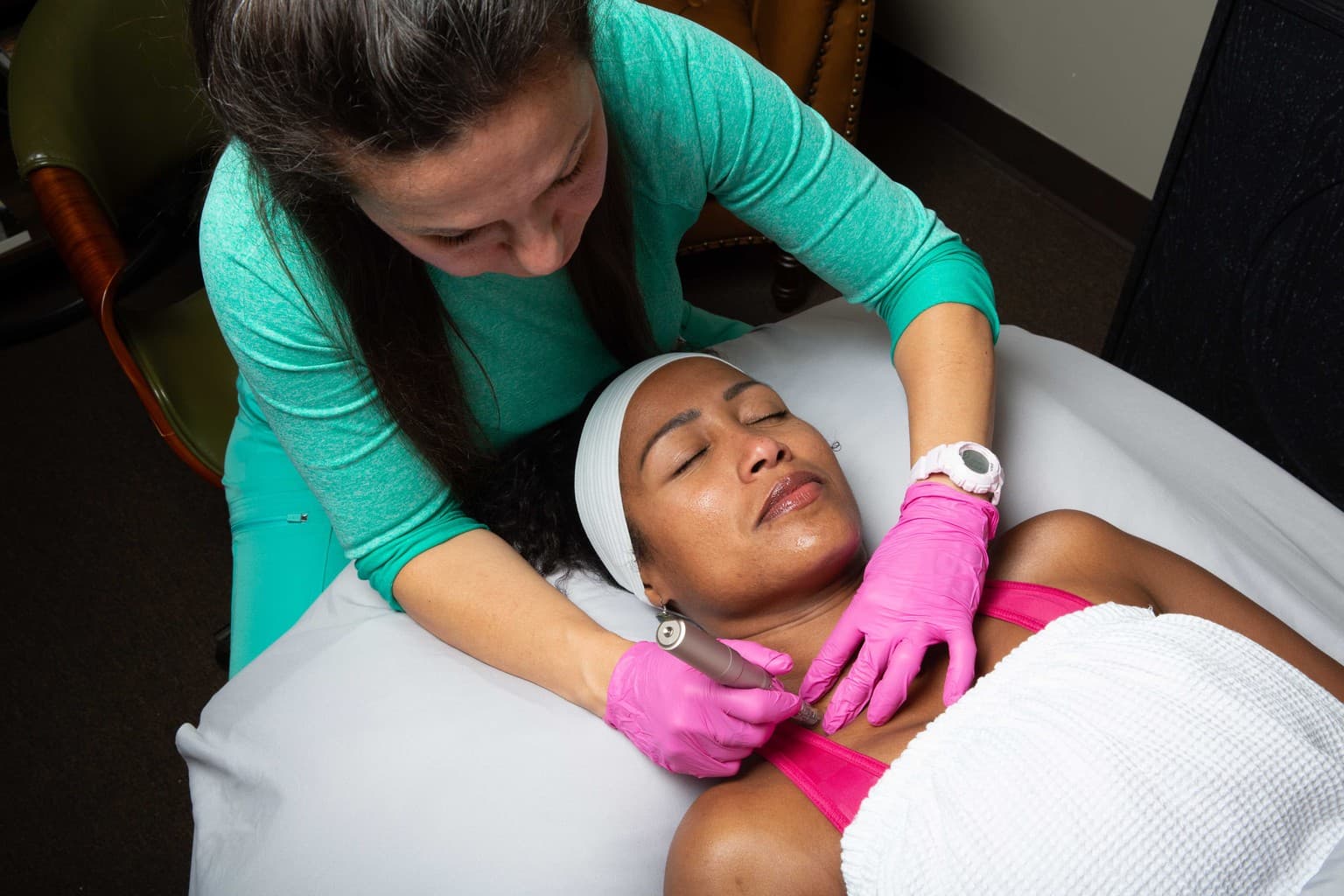
Controlled microneedling is studied as a way to invite fibroblasts to deposit and remodel collagen. The invitation is not a command. Sleep, nutrition, hormones, and how aggressively we treat all change the reply.
Neuromodulators and fillers change appearance on a different clock. They are not the enemy of this page; they are a different biology. This protocol asks tissue to remodel. That takes pacing, not a same-week “after.”
What research has studied
How we use numbers. When a percentage or count appears here, it belongs to a named study with a named population. It is not a studio guarantee.
Percutaneous collagen induction papers have reported histologic collagen change and clinical softening of wrinkles in studied groups (Aust and colleagues, 2008; Alster and Graham, 2018). Those findings support a remodeling model. They do not support guaranteed percentage reductions, pore “erasure,” or unsourced multi-hundred-percent collagen claims.
In a single-center trial of four monthly face-and-neck treatments (32 completers, ages 44–65, Fitzpatrick I–IV), facial dermal density by ultrasound rose 101.86% from baseline at three months after the last session, epidermal density 19.28%, and facial elasticity 28.2%. Collagen type III and elastin gene expression were higher; total elastin protein was unchanged (Wamsley and colleagues, 2021). Ultrasound “density” is not the same as a collagen-percentage guarantee. The work was industry-supported.
In a related neck-wrinkle series of four monthly treatments (32 completers), blinded wrinkle ratings improved. On a patient satisfaction questionnaire, 93.8% reported improvement in wrinkles — that is self-report, not an objective clearance rate. Subject global aesthetic improvement was 73.3% at 30 days and 68.8% at 90 days (Alqam and colleagues, 2022).
What this means in practice
Renew is our language for fine lines, firmness, elasticity, and healthy aging. Care is sequenced across phases so remodeling can accumulate. We aim for skin that still looks like you — more resilient, not performed.
Botanical and serum support may enter the protocol when they serve the skin in front of us. We do not publish unsigned “80% cell proliferation” or wrinkle-depth percentages from marketing dossiers.
Federica’s clinical perspective
I am not interested in making a face look uninhabited. I am interested in whether the tissue has enough reserve to remodel, and whether the person can live with the pacing. When I recommend Renew, I am recommending a conversation with collagen — not a fight with time.
The next step is not a retail booking. Begin with the Online Assessment so Federica can review what the skin is actually asking for. If this concern is yours, the Fine Lines + Collagen Pathway is where that conversation lives.
Educational only — not a substitute for personalized medical advice. Talk with a qualified clinician about your own care.
Visual explanation
New matrix is organized after the visit looks ‘normal.’ Fine-line change, when it comes, is usually a remodeling story measured in weeks to months — not a same-week photograph.
Last reviewed 2026-08-18 · Evidence: supported